
“Modern licensing requires simple processes.”
In 2025, GVL initiated a number of important developments: digital licensing was further expanded with the launch of lizenz.gvl, whilst at the same time GVL published its first sustainability report. Both initiatives reflect our commitment to making our processes more transparent, sustainable and user-focused. We speak to Christoph Gruschwitz, Head of Finance, about the key role the Finance department plays in all these areas.
In 2025, GVL launched its own portal for right users for the first time. What are GVL’s long-term objectives for the new platform?
With lizenz.gvl, we have created a central digital platform through which licencees can acquire rights more easily and efficiently. Modern licensing requires simple processes. That is why we want to make these even more user-friendly, faster and more transparent for users.
What was the rationale behind the development of lizenz.gvl, and how will the platform be further expanded?
Right users are an important target group for GVL because, put simply, today’s licensing is tomorrow’s remuneration. With lizenz.gvl, we have therefore deliberately built our own platform for digital licensing in order to tailor processes more closely to the needs of licencees and to further develop rights marketing in the long term. Private radio stations were integrated at the outset, followed by web radio stations in early 2026. We are currently working on implementing the tariffs for private television broadcasters, which we aim to finalise before the end of this year. Looking ahead, we are exploring the possibility of extending the platform to further user groups.
Transparency plays a central role for GVL as a collecting society – not only for licencees but also for rights holders. What is key to ensuring that rights holders can understand how Collections are generated and paid out?
The current state of digitalisation enables us to provide information more quickly, accurately and clearly. This allows rights holders to better understand notifications, statements and distributions, and to complete many processes more easily. At the same time, our systems help to streamline procedures and reduce processing times. This is particularly important when it comes to complex distribution processes. Trust is built where processes are understandable and decisions are transparent. Our aim is to provide rights holders with a clear overview of their remuneration at all times, thereby further strengthening trust in GVL’s work.
GVL is currently publishing its first-ever sustainability report, entirely of its own accord and without any legal obligation to do so. Why was it important to actively address this issue nonetheless?
For us, sustainability is not merely a regulatory issue, but an expression of responsible action. Through the sustainability report, we provide clarity on our goals, measures and developments – for rights holders, staff and partners. At the same time, engaging with this topic helps us to further develop our structures and integrate sustainability even more closely into our decision-making. The fact that we are taking this step voluntarily demonstrates our commitment to exercising responsibility in a credible and long-term manner.
You were in charge of compiling the report. Which insights or discussions stood out for you in particular?
Above all, it became clear to me just how many areas sustainability actually touches upon – far beyond environmental issues. Working on the report has shown how important transparency, responsible corporate governance and long-term thinking are, even for a collecting society. At the same time, the discussions made it clear that sustainability is not a one-off project, but requires an ongoing engagement with the issue.
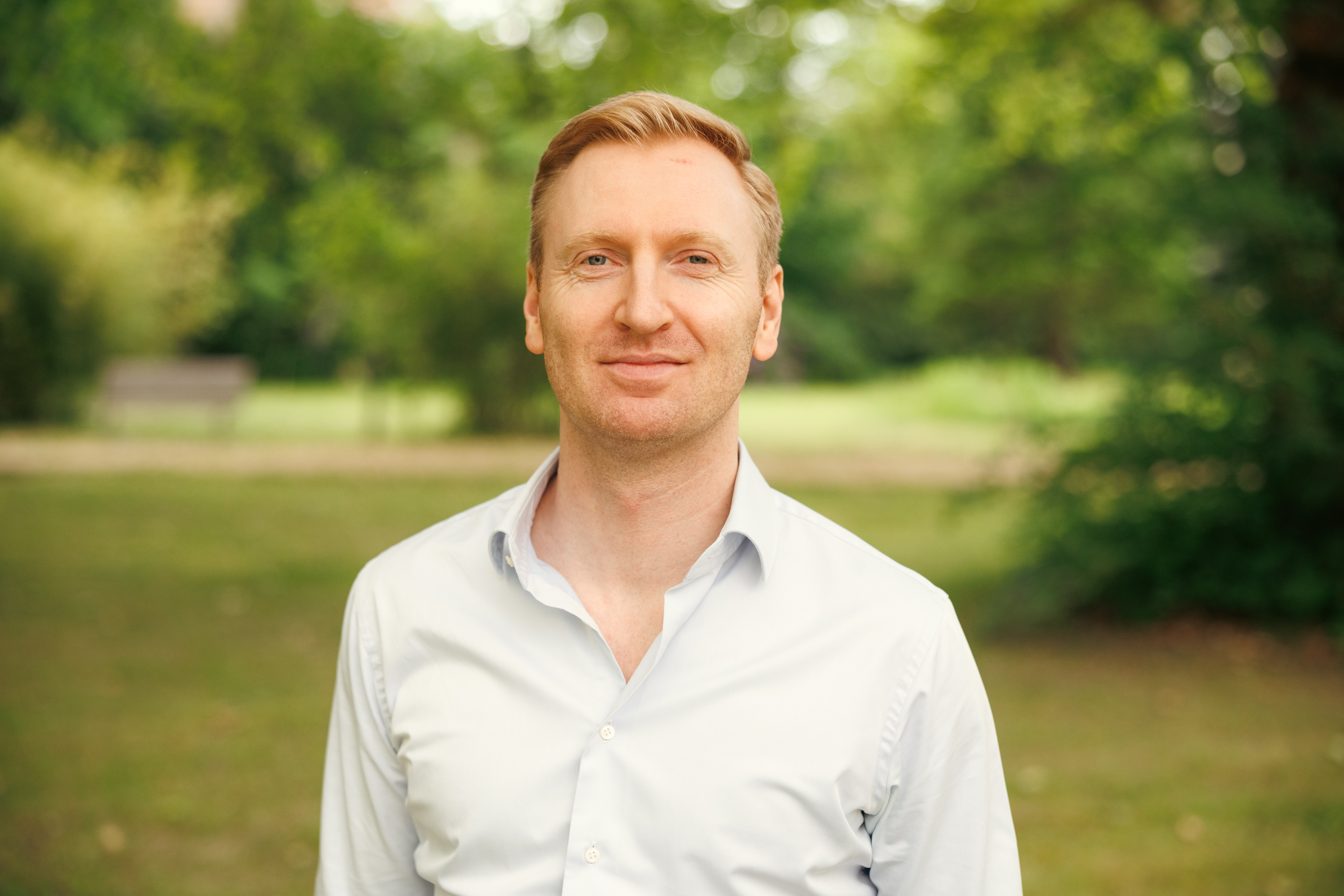
Christoph Gruschwitz is Director of Finance at GVL. Together with his team, he is responsible for key financial processes within the company, including the collection of licence revenues, the payout to rights holders, as well as management accounting, bookkeeping and treasury. Before joining GVL, he served, amongst other roles, as CFO at FC Bayern Basketball and held various senior finance positions at Axel Springer SE and Ernst & Young.